What stays the same
Your body cannot store protein the way it stores fat or carbohydrate, so it needs a steady supply. Muscle, skin, hair, enzymes and the antibodies that fight infection are all built from the amino acids protein provides, and they are broken down and rebuilt every day. That turnover is why protein is a daily need rather than something you top up once in a while.
Of the twenty amino acids the body uses, nine are called essential because you can only get them from food. Dairy, eggs, meat, fish and soy contain all nine in useful amounts. Whey, the protein separated from milk during cheesemaking, is one of the richest sources of leucine, the amino acid most closely linked to switching on muscle repair.
How much, roughly
Australia's Nutrient Reference Values set the recommended daily intake for most adults at about 0.75g of protein per kilogram of body weight for women and 0.84g for men. That is the amount needed to avoid deficiency, and many dietitians suggest active people and older adults aim higher, often somewhere between 1g and 1.6g per kilogram.
For a 70kg adult that works out to roughly 60 to 110g a day. Most Australians reach the lower end through normal eating. The gap tends to show up at breakfast, in people who eat little meat, in teenagers who skip meals and in older adults whose appetite has dropped.
Teens, fifteen and up
Growth plus sport pushes needs towards the top of the adult range. Food first; a shake fills the gaps.
A teenager going through a growth spurt while training three or four times a week is building bone and muscle at a rate few adults ever match. Teenage boys aged 15 to 18 need around 65g of protein a day and teenage girls around 45g, and active teens often need more. The practical problem is rarely the total. It is that breakfast gets skipped and the bulk of the day's protein lands at dinner.
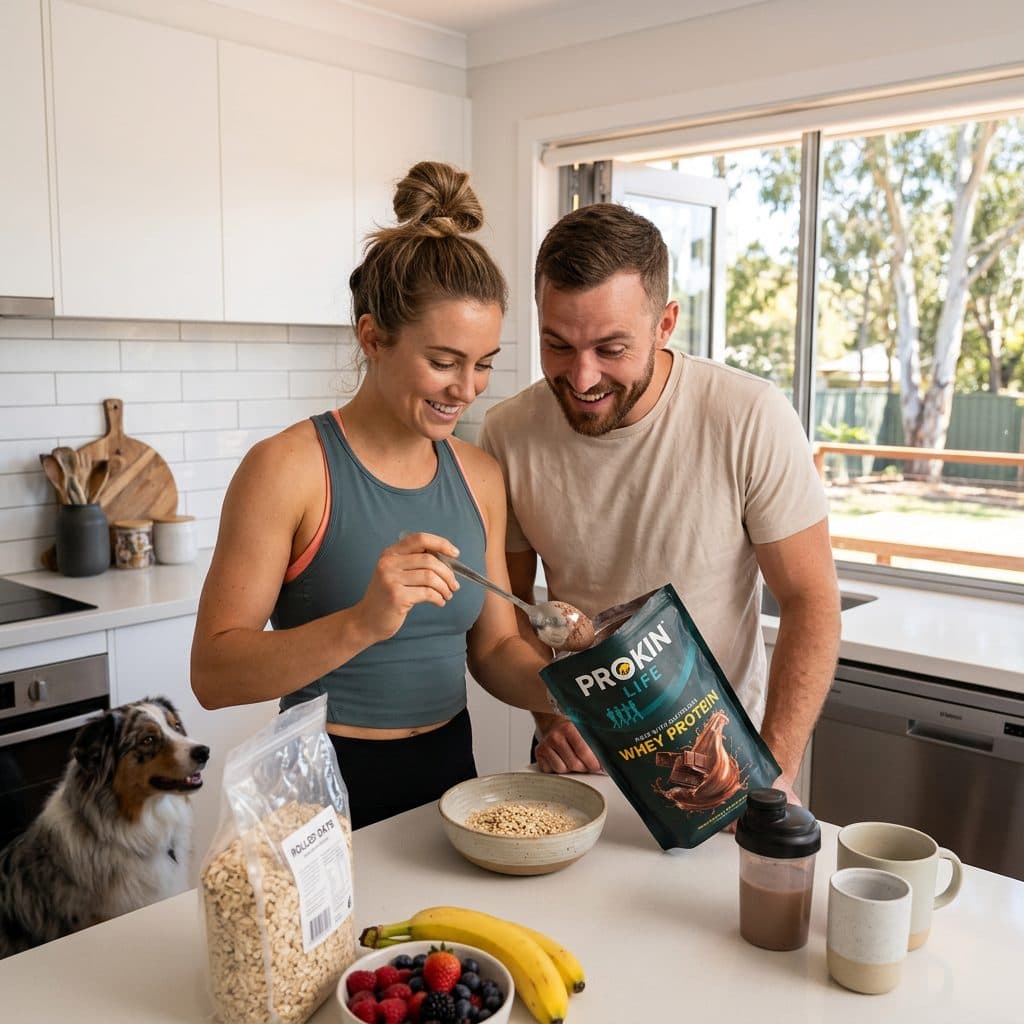
A glass of milk with a scoop of Prokin Life blended through it, a yoghurt bowl or eggs on toast all close that morning gap. We recommend Prokin Life for teenagers fifteen and over. Prokin Ignite contains caffeine; it is also for fifteen and over, with no more than 2 serves a day.
The working years
Between about twenty-five and fifty, protein is mostly about maintenance. Muscle mass slowly declines from the thirties onwards unless it is used, and a steady protein intake paired with regular movement keeps that decline small.
This is also the stage where convenience wins. Long days, school runs and late meetings mean lunch is often whatever is closest. Keeping a pack of protein powder at work or in the pantry gives you a quick 25g serve when a proper meal is not on the cards. It is not a meal replacement, but it is better than nothing, and far better than a vending machine.
After fifty
The useful range moves up to help keep muscle and strength, especially alongside resistance exercise.
From around fifty, the body becomes less responsive to protein. Researchers call it anabolic resistance: the same serve produces a smaller muscle-building response than it did at thirty. The recommended intake for Australians over seventy rises to about 0.94g per kilogram for women and 1.07g for men, and expert groups working on healthy ageing often suggest 1g to 1.2g.
Muscle matters here for more than strength. It supports balance, blood sugar control and independence, and losing it raises the risk of falls. Pairing protein with two or three sessions of resistance exercise a week, even bodyweight squats or light weights at home, gives the best return.
Spread it out
Most people do best spreading protein across three or four meals rather than one large serve. The typical Australian pattern is a light breakfast, a moderate lunch and a big dinner. Moving some of that dinner protein to the morning makes better use of it.
A useful target for each main meal is 20 to 40g, with older adults towards the upper end. One scoop of Prokin Life provides 25g, which makes it an easy way to bring a light breakfast up to that level without cooking.
Quality matters as much as quantity
Protein quality describes how well a food supplies the essential amino acids in the proportions the body needs, and how easily they are digested. Animal proteins such as dairy, eggs, meat and fish score highly. Soy is the strongest plant source, while grains, legumes and nuts each fall short in one or two amino acids, which is why plant-based eaters do best mixing several sources across the day.
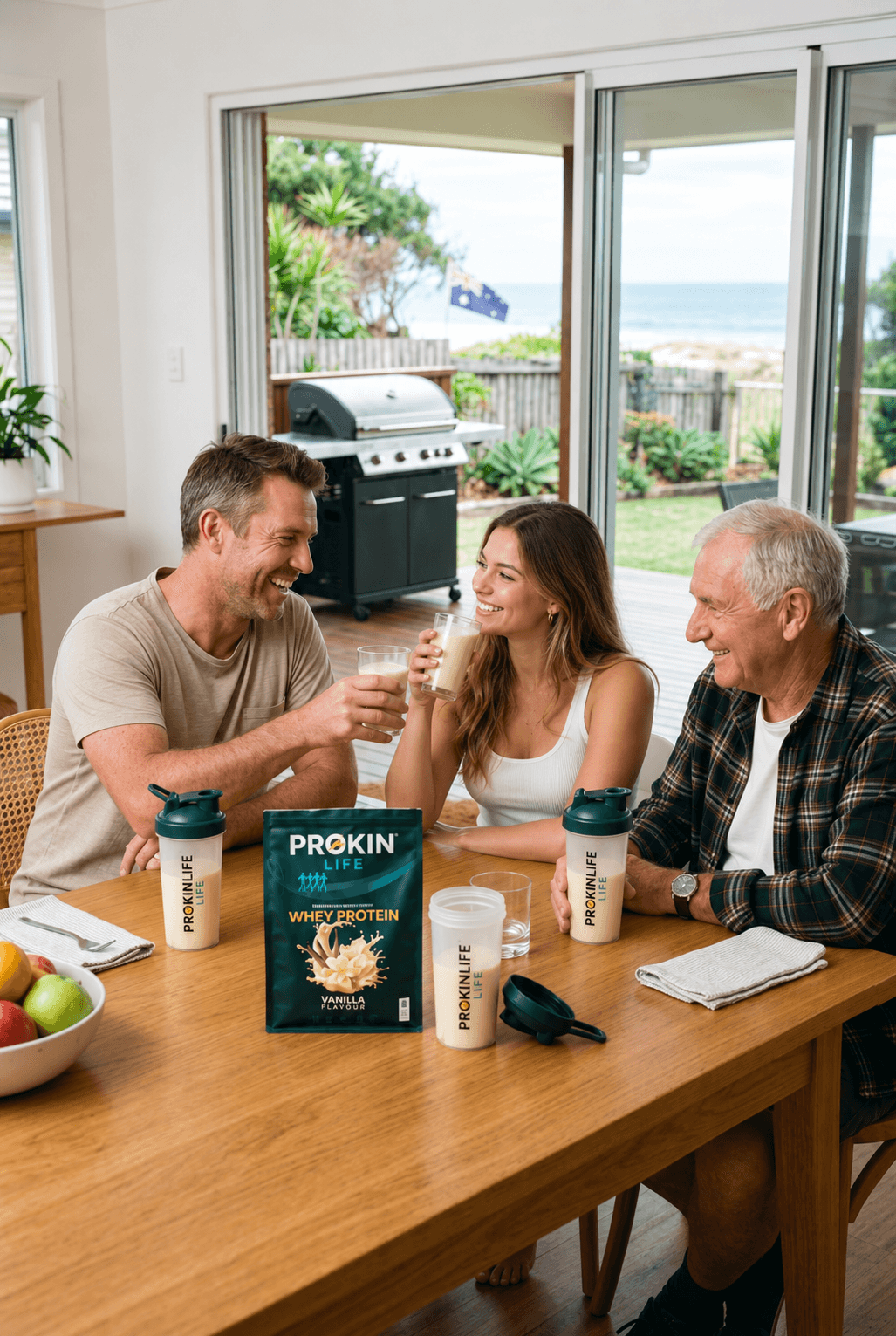
For most households a mix of foods covers this without much thought. Whey earns its place because it is highly digestible, rich in leucine and easy to add to meals people already eat, from a parent's coffee-break shake to a grandparent's porridge.
One pack for the whole house
Because the need is the same at every age and only the amount changes, one tub can serve a whole household. Stir it through breakfast oats, shake it with milk after sport, blend it into a smoothie for a parent recovering from illness, or use unflavoured Life in soups and porridge where you do not want any sweetness.
Prokin Life is made in Truganina, Victoria from Australian dairy, with no added sugar. Our protein calculator gives a starting point for each person in the house, and your GP or an accredited practising dietitian can tailor it to your health, medications and goals.
Common questions
Is too much protein harmful? For healthy people, intakes up to around 2g per kilogram are considered safe. People with kidney disease are the main exception and should follow their doctor's advice. Do children under fifteen need protein powder? Generally no. Most younger children get enough from milk, eggs, meat and legumes, and their needs are small. Can protein powder replace a meal? It can fill a gap on a busy morning, but a balanced plate of whole foods provides fibre, vitamins and minerals a shake on its own does not.