What 'enough' means
There are two different answers to how much protein you need. The first is the recommended dietary intake in Australia's Nutrient Reference Values: about 0.75g per kilogram of body weight for adult women and 0.84g for men, rising after seventy. That is the amount that meets the needs of almost all healthy people and prevents deficiency.
The second answer is what is useful for your situation. Active people, those trying to lose fat while keeping muscle, older adults and people recovering from illness or surgery often benefit from 1g to 1.6g per kilogram. The right figure depends on your age, size, activity and health.
Signs you might be falling short
Most Australians eat enough protein overall, but intake is often uneven and some groups fall short more often than others. Older adults with a smaller appetite, people who eat little or no meat, teenagers who skip meals and anyone dieting hard are the most common.
Possible signs include feeling hungry soon after meals, slow recovery from exercise, losing strength over time and frequent snacking on sweet foods. None of these prove a shortfall on their own, but if several apply, tracking your food for a few days is worth doing.
A quick self-check
Write down everything you eat for three ordinary days, including one weekend day. Use the nutrition panels on packaged foods and a free food database for the rest. Add up the protein each day and divide by your body weight in kilograms.
You will usually notice a pattern quickly. Many people have 10g at breakfast, 20g at lunch and 50g at dinner. The total looks fine, but two of the three meals sit well below the 20 to 40g range that best supports muscle.
Everyday sources, by the numbers
Some typical serves and their protein content are a useful reference. Two eggs provide around 12g. A 170g tub of Greek yoghurt provides about 15 to 17g. A palm-sized 120g piece of cooked chicken breast gives roughly 35g. A 95g tin of tuna gives about 20g. A cup of cooked lentils gives about 18g, and a cup of milk about 8 to 9g.
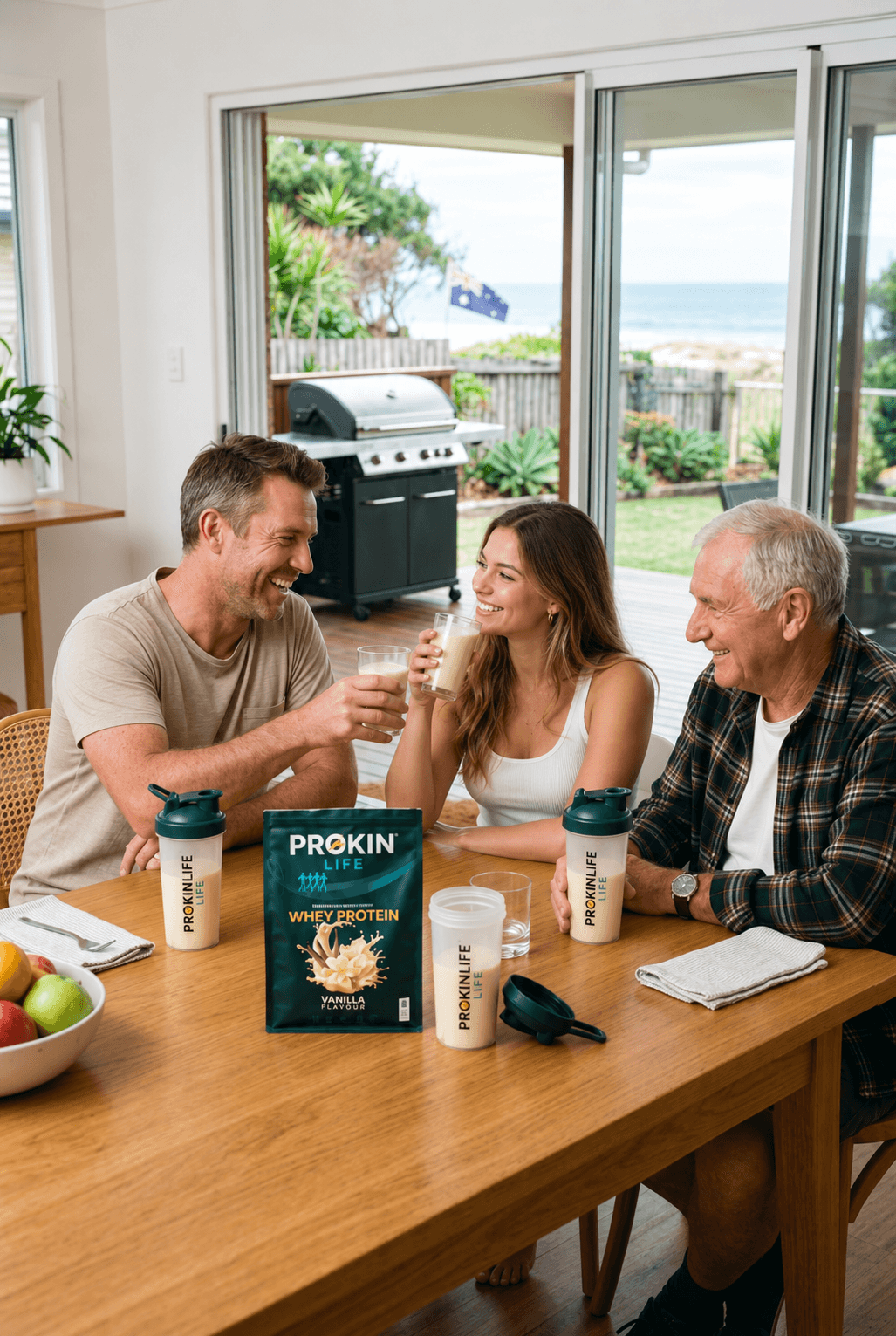
A single scoop of Prokin Life adds 25g with no added sugar. Mixed with a cup of milk, that one glass provides over 30g, which is enough to turn a light breakfast into a high-protein one.
Fixing breakfast first
Breakfast is the meal most likely to be low in protein, because the usual Australian options of toast, cereal and fruit are mostly carbohydrate. It is also the easiest to fix.
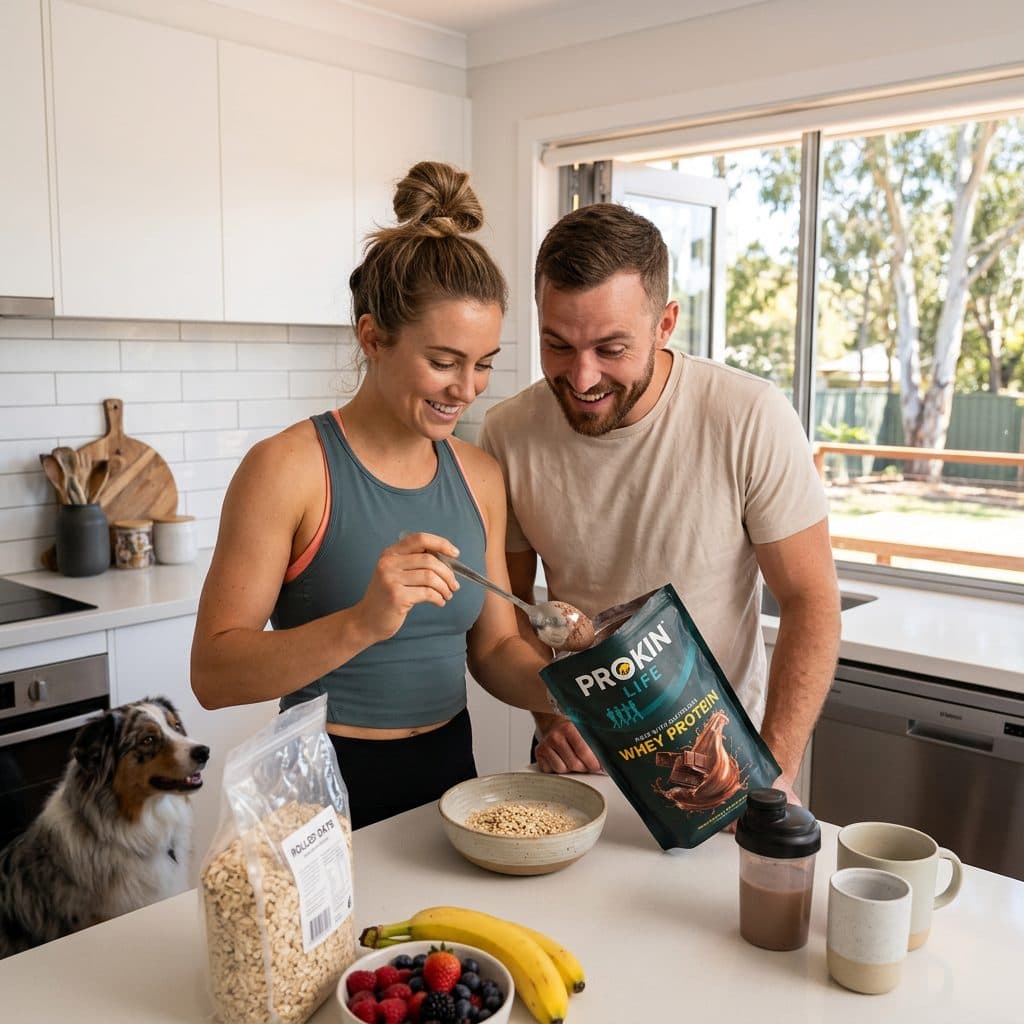
A few quick swaps: stir a scoop of protein powder through oats after cooking, choose Greek yoghurt over regular, add eggs to toast, or make a shake with milk, a banana and a scoop of Life. Each takes less than five minutes.
Lunch and snacks
At lunch, the simplest test is whether there is a clear protein item on the plate: chicken, tuna, eggs, tofu, lentils, cheese or leftover meat. A salad or sandwich without one will leave you hungry by mid-afternoon.
For snacks, cheese and crackers, a boiled egg, a handful of nuts with yoghurt or a protein shake will hold you far longer than a biscuit or muesli bar. Keeping a tub of protein at work removes the need to plan.
A sample day at 100g
For a 70kg active adult aiming for about 1.4g per kilogram, here is how 100g can look without any special foods. Breakfast: oats made with milk and a scoop of Prokin Life stirred through, about 35g. Lunch: a wrap with chicken, salad and cheese, about 30g. Afternoon: a tub of Greek yoghurt, about 15g. Dinner: a fillet of salmon with rice and vegetables, about 30g.
That totals around 110g, spread across four eating occasions, with each main meal landing in the 20 to 40g range. Swap the foods for whatever suits your household; the structure is what matters.
Plant-based eaters
Vegetarians and vegans can meet their needs, but it takes more planning. Plant proteins are usually less concentrated and lower in leucine, so serves need to be larger. Tofu, tempeh, soy milk, lentils, chickpeas, beans, seitan and nuts are the main building blocks, and combining several across the day covers the full amino acid profile. Vegetarians who eat dairy can also use whey to top up.
When to get advice
People with kidney disease, those on protein-restricted diets and anyone with a complex medical condition should talk to their GP or an accredited practising dietitian before increasing protein. The same applies during pregnancy, when needs change.
For everyone else, our protein calculator gives a personal daily range in under a minute. Use it as a starting point, then adjust based on how you feel, how you recover and how your strength changes over time.
Common questions
Is protein powder necessary? No. It is a convenient way to reach a target, not a requirement. Can I absorb more than 30g at once? Yes. The body digests and uses larger serves; the muscle-building response simply levels off. The rest is used for other purposes or energy.
Is it possible to eat too little protein while eating plenty of food overall? Yes. Diets built around bread, pasta, cereal and snack foods can be high in energy and still low in protein. Checking a few days of meals is the only reliable way to know.